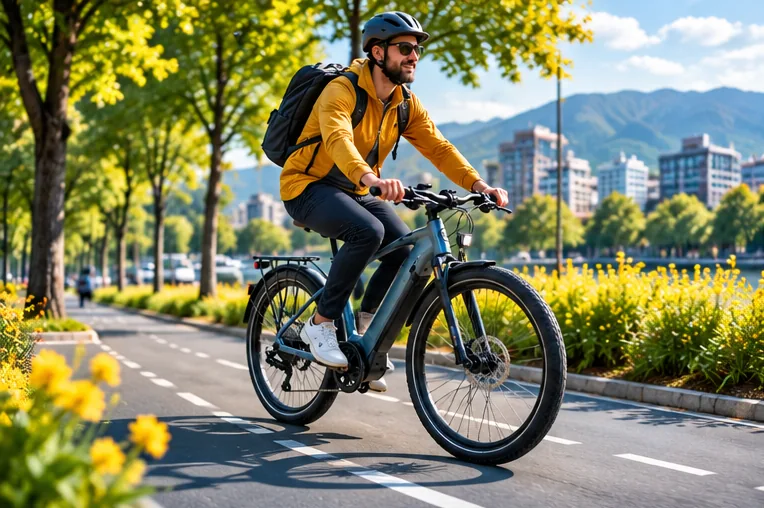
A no-hype first e-bike guide to fit, ride style, budget, electrical safety, local access and practical ownership.
Begin with a week of actual journeys
Write down three trips you would take this month: distance each way, hills, where the bicycle will live, and whether you need to carry groceries, a child or work equipment. This is a better shopping filter than a headline horsepower claim.
Think about the worst regular trip, too. A 10-mile commute with a steep climb, cold weather and a heavy backpack is a different requirement from a Sunday rail-trail ride. The useful bike is the one that handles the demanding ordinary day without becoming a burden.
Choose a form factor before comparing motors
Commuters usually benefit from lights, fenders, a practical rack and familiar road tires. Folding bikes solve storage constraints but may still weigh much more than shoppers expect. A cargo bike needs loading stability and appropriate, manufacturer-approved accessories; an electric mountain bike needs components and access appropriate to its trails.
Step-through frames are about mounting ease and geometry, not a separate motor category. Fat tires may add comfort on loose terrain but can increase rolling resistance and make storage trickier. Pick the format that answers your problem before you get lost comparing motor wattages.
Plan around total ownership, not the sticker
Budget for a properly fitted helmet, a serious lock, a pump, basic service and any rack or bags you actually need. Ask a dealer what replacement battery, tire sizes, brake pads and warranty service will look like in two years. If the battery fails, replacement availability can matter more than the original discount.
A site may advertise a discounted entry variant while the configuration you need costs more. Check final checkout total, shipping, assembly, tax and available return terms. Use our checkout-cost tool to compare offers on the same basis.
Treat the manufacturer's range as a scenario
Battery energy is usually described in watt-hours. Actual distance varies with rider effort, assist setting, terrain, speed, wind, tires and load. Compare the conditions behind two range figures before deciding that one e-bike is 'twice as good.'
Use EBikeGuide's range calculator to model a conservative route with reserve instead of budgeting to arrive home at zero battery. Cold weather and battery aging should push the planning margin toward caution.
Verify charging, certification and access
Ask for the exact electrical-system standard and documented certification applicable to that model. UL 2849 addresses e-bike electrical systems; do not mistake a battery-only claim for whole-system certification. Use manufacturer-approved charging equipment and follow CPSC's guidance to stay present while charging.
U.S. electric-bicycle classes and trail access differ by state, city and land manager. Class labels are a starting point, not a universal permission slip. Always check your specific route and the exact configuration shipped to you.
Before you decide
- I have measured my normal routes and storage dimensions.
- I know the bike category and carrying need.
- I have looked at a real dealer return and warranty policy.
- I have checked charger compatibility and model-specific safety evidence.
- I have allowed budget for gear and service.
Sources & further reading
Primary references are linked so you can check their meaning and updates.